

Some business wins are bigger than the contract itself.
At first, the opportunity looked like a field execution challenge: build temporary access infrastructure in one of the most environmentally sensitive regions in the world. The project was located in the Yasuní ITT area of the Amazon Basin, where every operational decision carried environmental, political, regulatory, and reputational weight.
For Signature Systems, the project would involve roughly 10 kilometers of access road and two drilling platforms using MegaDeck® HD+. On paper, it was an infrastructure project. In reality, it became something much more valuable: a test of whether a product could be transformed into a category, a system, and eventually, a strategic asset.
The Problem:
A Strong Product Trapped in a Narrow Category
Before this project, Signature Systems had a capable product, but the market did not fully understand its strategic value.
MegaDeck® HD+ was often seen as a composite matting product — useful, functional, and technically strong, but still framed as an alternative to traditional construction methods. That created a limitation. The company was competing against deeply entrenched gravel-based construction, and the value of its solution had not yet been fully translated into the language that decision-makers needed to hear.
The challenge was not just to prove that the mats worked.
The real challenge was to convince multiple risk-averse stakeholders to trust a non-traditional solution inside a protected ecosystem.
There were environmental regulators to satisfy. Government ministries to align. Operators to reassure. Field contractors to train. NGOs and public scrutiny to consider. Any failure could become more than an operational mistake; it could become a reputational and regulatory problem.
In that environment, a product pitch was not enough.
Signature Systems needed more than technical credibility. It needed a business case, a deployment system, and a narrative strong enough to move stakeholders from caution to confidence.
The Solution:
Reframing the Product as Recoverable Access Infrastructure
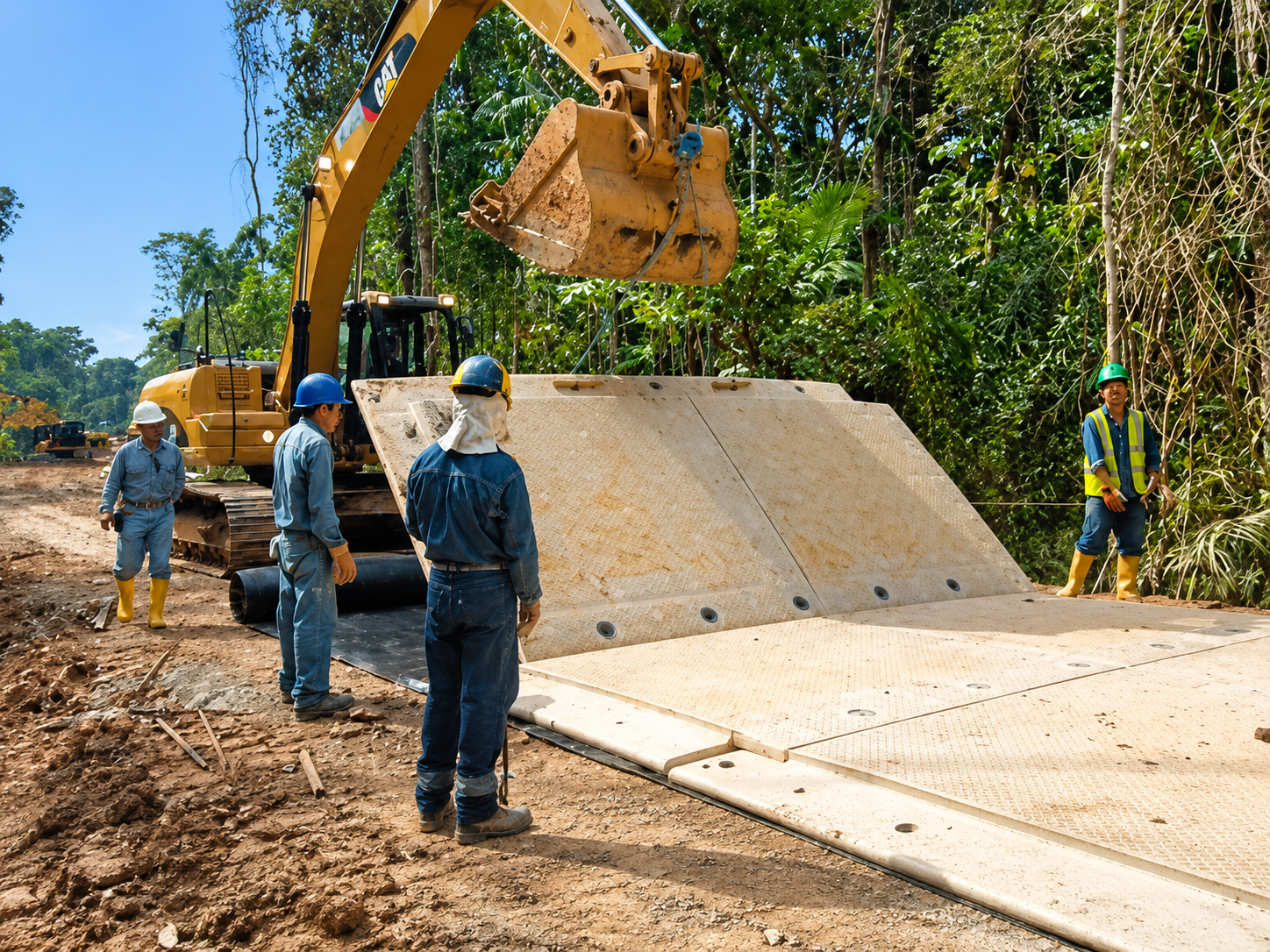
The turning point came when the product stopped being positioned as “composite mats” and started being understood as something larger: recoverable access infrastructure.
That shift changed the conversation.
Instead of selling an alternative material, the project was positioned as a new way to build access in sensitive environments. The value was no longer limited to what the product was made of. The value came from what the system made possible.
It reduced environmental disturbance.
It lowered reclamation exposure.
It accelerated deployment.
It improved logistics.
It supported compliance.
It created a defensible path for responsible field execution.
The core message moved from:
“We have a better mat.”
to:
“We have a recoverable infrastructure system that can reduce risk, cost, disturbance, and time in sensitive environments.”
That reframing mattered because each stakeholder cared about something different.
Environmental regulators needed confidence that disturbance would be minimized. Operators needed assurance that timelines and field performance would hold. Government stakeholders needed a solution that could withstand scrutiny. Contractors needed a practical system they could actually execute.
The solution was not just a better explanation of the product. It was a strategic translation of value.
The System:
Turning Strategy Into Field Execution
A good narrative only holds if the field can prove it.
That is where the system became essential.
The project was translated into a deployable execution model designed to reduce friction before it appeared. Stakeholders were aligned early. Field crews were equipped with clear procedures. Performance was measured daily. The deployment was structured so that the business case and the operational reality reinforced each other.
The system included several layers.
First, the business case was engineered. Environmental impact, reclamation cost avoidance, and deployment efficiency were quantified. This gave decision-makers measurable proof instead of abstract claims.
Second, stakeholder alignment was built intentionally. Operators, government ministries, environmental regulators, and contractors were brought into the logic of the project before execution created unnecessary tension.
Third, field enablement was systemized. Deployment SOPs, load distribution maps, QA/QC protocols, cleaning and biosecurity procedures, and retrieval sequencing gave the work a repeatable structure.
Finally, the execution model was designed around staged logistics, central laydown, sequential deployment, and daily performance validation.
This was the difference between installing a product and proving a system.
The mats mattered, but the system around them made the value visible.
The Result: A Project That Increased Enterprise Value
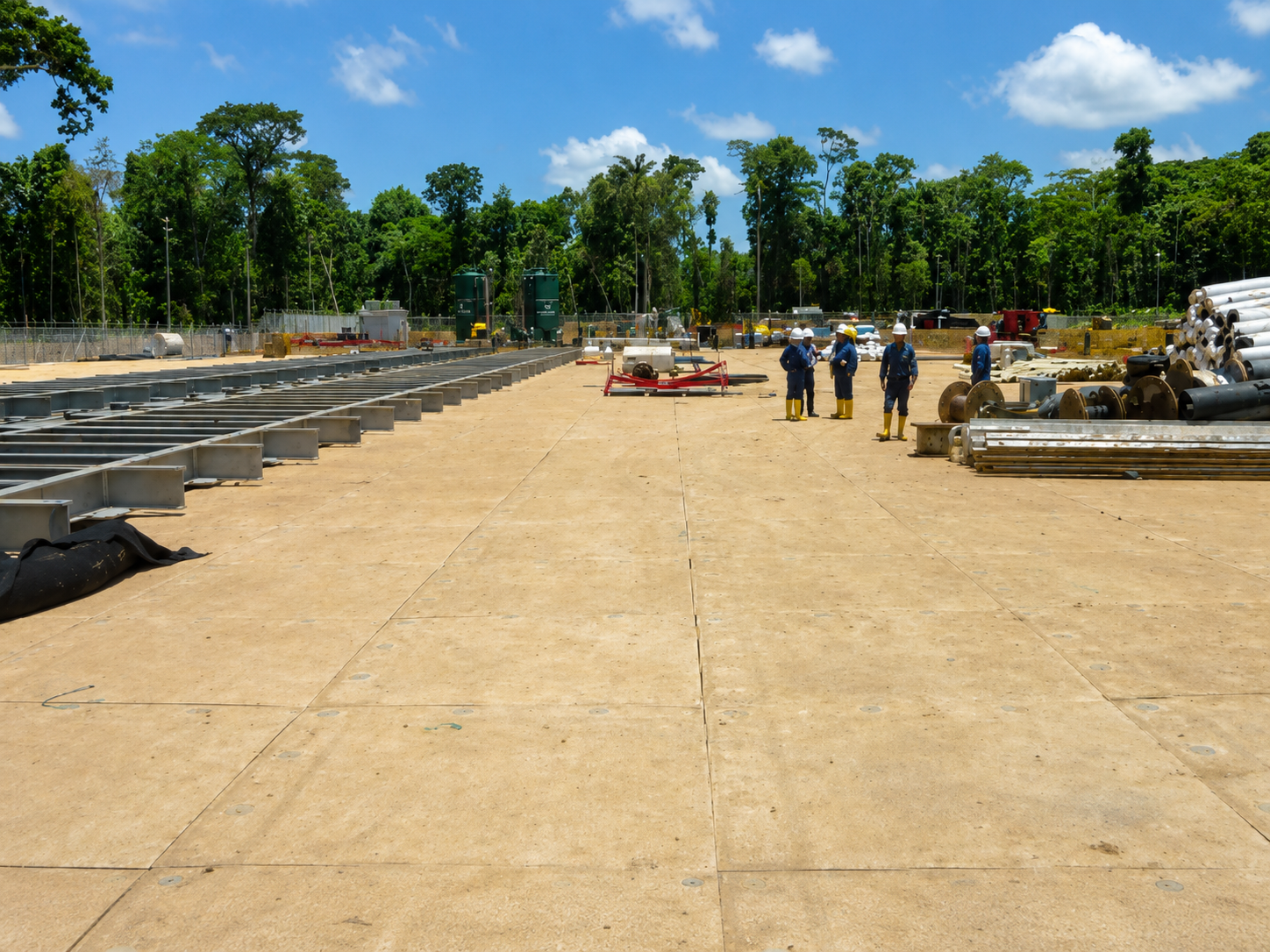
The operational results were significant.
The project delivered a 62% reduction in environmental disturbance, avoided approximately $1.74 million in reclamation costs, accelerated deployment by roughly 76%, and recorded zero safety incidents. It also helped secure an approximately $10 million contract and achieved validation across multiple stakeholders.
But the deeper result was strategic.
The project gave Signature Systems proof in one of the most difficult operating environments imaginable. It showed that the company was not simply selling a niche product. It was creating a new procurement category for sensitive access infrastructure.
That proof expanded the company’s total addressable market. It strengthened its ESG positioning. It gave the business a stronger narrative for future growth. And ultimately, it became part of the acquisition story that contributed to the company’s sale and owner liquidity.
In other words, the project did more than generate revenue.
It increased enterprise value.
The Deeper Lesson:
Products Don’t Create Exits, Systems Do
This case reveals a pattern that applies far beyond infrastructure.
Businesses rarely scale, attract capital, or exit simply because they have a good product. They become valuable when their product is supported by a system that can be trusted, repeated, measured, and explained.
In this case, the value did not come only from the mats.
It came from four things working together:
Proof in extreme conditions.
A newly defined category.
A repeatable execution model.
A quantified, defensible value narrative.
That combination changed the meaning of the project. It was no longer just a field deployment. It became a strategic proof point.
Final Reflection
The Signature Systems project shows how operational execution can become enterprise value when the right system is built around it.
A product became a category.
A deployment became a proof point.
A project became part of an exit narrative.
That is the difference between doing valuable work and building a valuable business.
This was not just a successful deployment. It was a strategic proof point that expanded market potential, strengthened positioning, and contributed to a successful founder-owners exit.