


How a fragile delivery pivot became a stable, scalable system, and revealed a smarter kind of growth
Sativo did not begin as a perfectly structured business.
It began as something far more interesting: a business with a rare instinct.
The brand had something most small businesses spend years trying to find — a strong concept, a differentiated product logic, and an emotional idea that could live beyond a physical location. Sativo was not simply selling pizza. It was building a delivered experience: something ritualized, collectible, intimate, and memorable.
At the center of that vision was Marcia.
She understood that the real value was not just in the food. It was in the moment around the food. The box. The feeling. The story. The sense that a customer was receiving something curated rather than transactional.
That instinct mattered.
But instinct alone does not make a business scalable.
At baseline, Sativo was conceptually strong but operationally fragile. The brand had differentiation, product clarity, and delivery potential, but the system underneath was not yet ready to carry more demand. Delivery control, workflow discipline, KPI visibility, cashflow stability, and operational governance were still underdeveloped. The uploaded case study describes this initial state as “fragile delivery chaos” moving toward “a stable, scalable system”
The business had a powerful idea.
What it did not yet have was a business spine.
The pivot: from location-first to delivery-first
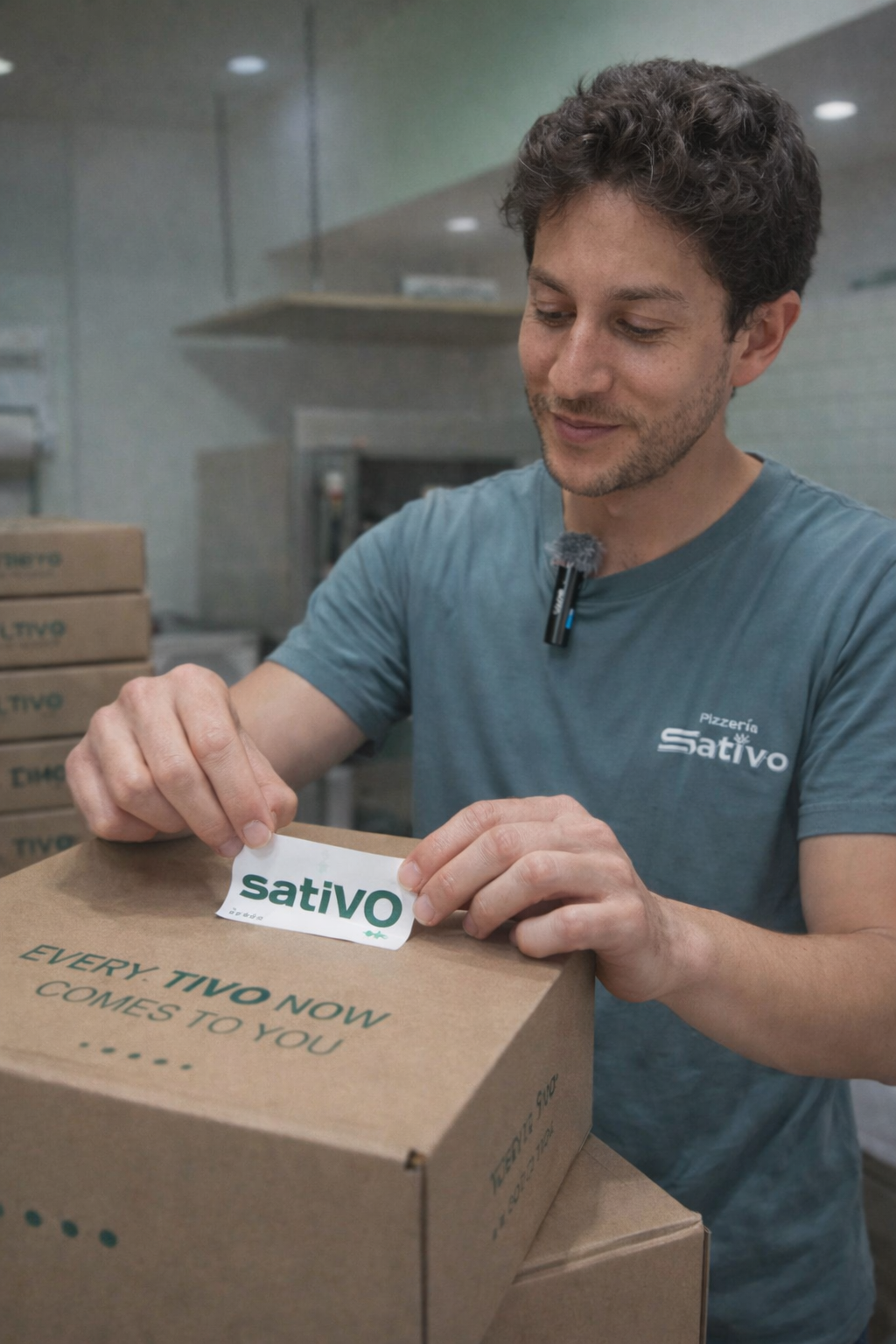
Sativo’s strategic shift was bold.
The business moved away from treating the physical location as the primary engine and began positioning itself as a delivery-first experiential brand. The showroom became secondary. The delivered experience became the center of gravity.
That was the right strategic direction.
But it also created a dangerous question:
Could the business survive if the strategy actually worked?
More specifically, could Sativo handle three times the delivery volume without collapsing under the pressure?
That question became the turning point.
Instead of rushing into marketing, growth, or expansion, Sativo paused and ran an Operational Anatomy stress test. The purpose was not to refine the brand. It was not to make the concept more beautiful. It was not to add more ideas.
The purpose was mechanical and honest:
Can this business metabolize more volume without structural failure?
The answer, at first, was no.
The stress test revealed severe fragility. Workflow and SOP integrity scored 7 out of 20. Capacity and load elasticity scored only 3 out of 20. Governance and signal visibility scored 2 out of 20. Under a three-times delivery load, the likely error rate was projected to exceed 25%. The total structural score at Week 0 was 24 out of 100 — fragile
That could have been discouraging.
But in reality, it was the most useful moment in the process.
Because once the truth was visible, the business no longer had to guess.
The real decision: stop scaling, start stabilizing
Many businesses mistake movement for progress.
They add more offers, more posts, more promotions, more delivery volume, more urgency. But when the operating system underneath is weak, growth does not solve the problem. It amplifies it.
Sativo chose a different path.
It stopped trying to scale and started stabilizing.
The goal was clear: move the system from 24 out of 100 structural viability to at least 65 out of 100 before growth resumed. This created a new operating standard. Growth would not be allowed just because the brand was exciting. Growth had to be earned.
The stabilization protocol focused on practical, measurable signals:
On-time delivery needed to reach at least 90%.
Errors needed to fall to 5% or below.
Refunds needed to stay at 3% or below.
Founder stress needed to remain at 6 out of 10 or lower.
Margins had to be protected.
A simple but powerful governance rule was also installed: if founder stress reached 7 or higher and two or more KPIs dropped at the same time, the business would enter a “No New Moves” week
That rule changed the culture.
It reduced reactive decision-making. It made stress visible. It prevented the founder from solving volatility by adding more volatility. And it forced the business to respect the signals before making another move.
Less debate.
Less instinct-only decision-making.
More numbers.
More rhythm.
More discipline.
The system starts to form
In Week 1, the focus was observation.
The Order-to-Door flow was mapped. Each step was timed. Seven days of KPIs were tracked. Nothing was fixed yet. The purpose was to see the system clearly before interfering with it.
That matters because premature fixing often creates more noise. A founder sees one symptom and immediately changes five things. Then nobody knows what actually worked.
Sativo did the opposite.
It slowed down enough to observe.
By Week 5, the business had installed a daily dashboard and a weekly review ritual. The rule was direct: no narrative talk allowed — only numbers
That rule may sound cold, but for a founder-led business, it can be liberating.
Numbers reduce emotional guessing.
They create distance between the founder and the problem.
They allow the business to say, “This is not about whether we are good or bad. This is about what the system is showing us.”
By Week 8, Sativo ran a two-times volume validation stress test to see whether the operating structure had become more durable.
The result was progress — but not enough.
Week 1 showed on-time delivery at 82%, error rate at 12%, refunds at 5%, and founder stress at 6.6. During the Week 3 stress window, performance dipped: on-time delivery fell to 76–79%, errors rose to 16–18%, refunds rose to 6–7%, and daily founder stress reached 8–9. By Week 7, the business had improved significantly, with on-time delivery at 89%, error rate at 6–7%, refunds at 3.5–4%, and founder stress at 6.4. But the end-state estimate after eight weeks was still only about 55 out of 100 structural viability
Stronger.
But not yet stable enough.
This was another critical decision point.
Sativo could have declared victory. It could have used the improvement as proof that the business was ready. It could have pushed growth anyway.
Instead, it did something more mature.
It extended stabilization.
The breakthrough: operational stability meets founder clarity
The next layer was subtle but important.
The issue was no longer only operational. It was also human.
When a founder is under pressure, the business absorbs that pressure. Decisions become more reactive. Priorities shift too quickly. New ideas interrupt unfinished systems. Emotional urgency re-enters the workflow.
In Sativo’s case, the loop looked like this:
Operational instability created emotional reactivity.
Emotional reactivity created operational noise.
Operational noise created more instability.
To interrupt that loop, Sativo added a contained Founder Micro-Clarity track.
This was not therapy. It was not deep identity work. It was not an abstract personal development exercise.
It was practical founder regulation and decision discipline.
The track focused on perceived regulation, belief-versus-load contrast, decision patterns, and founder stability thresholds
In plain English, Marcia needed to understand how her stress, beliefs, and decision patterns interacted with the business system.
Not because she was the problem.
Because, in a founder-led business, the founder is always part of the operating system.
Once that layer was installed, the business stabilized for real.
Structural viability reached 68 out of 100. During a controlled three-day +25% load test, KPI performance stayed within band, and the Founder Stress Index moved by no more than one point
That was the moment Sativo became scalable.
But that was not the real ending.
The plot twist: scalability revealed a better choice
Once Sativo stabilized, something unexpected became clear.
Marcia was not truly energized by higher volume.
She was energized by curated depth.
The storytelling. The ritual pacing. The selected clientele. The intimate experience moments. The sense that the brand could protect quality, emotion, and meaning instead of simply chasing more orders.
That was the real insight.
Stabilization did not just make scaling possible.
It gave Marcia the freedom to choose whether scaling was actually the right strategy.
Before stabilization, the business was reacting. It had to answer urgent operational questions. It had to deal with errors, delivery strain, refund risk, and founder stress.
After stabilization, the business could think.
That is when the smarter option emerged: not aggressive expansion, but a boutique, high-integrity experience model with strict client curation and capped volume.
In other words, Sativo earned the right to grow — and then discovered that the best growth path might not be louder.
It might be truer.
Before and after
Before the work, Sativo had a strong concept but a fragile system.
The vision was big, but governance was low. SOPs were not fully institutionalized. KPI ownership was missing. Scaling assumptions were untested. The founder was acting primarily as brand guardian, but the systems governor role had not yet been installed.
After the work, Sativo had measured throughput, clearer operating ceilings, known fragility bands, governance rituals, and metrics-driven discipline. Structural viability reached 68 out of 100, and founder stress was decoupled from controlled increases in delivery load
That is a very different business.
Not because the product changed.
Because the business learned how to see itself.
Why this case matters
The Sativo case matters because it challenges a common assumption in founder-led businesses:
If the concept is strong, the next move must be growth.
But that is not always true.
Sometimes the next move is stabilization.
Sometimes the business does not need more demand. It needs more truth.
Sometimes the founder does not need more ambition. They need a system that can hold the ambition they already have.
Sativo’s success was “unpredicted” because the work revealed something more valuable than a simple growth plan. It revealed the right growth philosophy.
The goal was not just to scale the delivery model.
The goal was to protect what made the brand special while building enough structure to make strategic choice possible.
That is the difference between fragile growth and aligned growth.
Fragile growth says:
“We have momentum. Let’s push.”
Aligned growth says:
“We have clarity. Now we can choose.”
The Infinite Solutions perspective

Sativo shows why growth should not begin with assumptions.
It should begin with evidence.
The process worked because it combined three layers that are often kept separate:
Operational truth: Can the system actually carry more load?
Stabilization discipline: What must be corrected before growth resumes?
Founder containment: How do we prevent stress from reintroducing noise into the business?
Most consulting approaches focus on one side.
Some hype the strategy but ignore the operational reality.
Others optimize operations but ignore the human volatility that comes from founder pressure.
Sativo needed both.
It needed the mechanics and the human layer.
The workflow and the decision discipline.
The dashboard and the founder threshold.
The result was not just a better delivery operation. It was a better strategic position.
The real result
Sativo did not become successful because it chased growth.
It became successful because it earned the right to grow.
Then it had the clarity to choose the right kind of growth.
That is the deeper lesson.
The most dangerous thing is not a bold pivot.
The most dangerous thing is scaling an untested system.
Sativo’s pivot was bold. Its concept was strong. Its instinct was rare.
But the turning point came when the business stopped relying on instinct alone and built the structure required to protect the experience, the founder, and the future.
That is what made the story work.
Not perfect operations.
Not endless expansion.
Not growth at all costs.
A clearer system.
A steadier founder.
A smarter path forward.